Greetings, everyone! Especially today, I’ve taken the initiative to share some thoughts by comparing my life and struggles with my country and surroundings.
Why? Because when a child born in a rural, remote area opens their eyes, they see who is in their family, what their village and community are like, what the environment for education is like, what the paths for struggling and walking are like, and how a child becomes a citizen of Nepal. After gaining citizenship, what does he do, how does he struggle, how does he fight, and whether he is able to stand firm on his ground? Such challenges constantly arise in life’s struggles. Especially in matters of education, certain topics are connected, but the practical challenges are often ignored. A person studies one way and navigates life from a different path. In Nepal, people often get caught between these two streams.
When the struggles of village, farmer life, a childhood tied to the soil and production, transitions to city life. Once a rural farmer becomes a city dweller, they face numerous challenges. Coming to Kathmandu, a place with polluted air and the need to buy everything, depletes the little pocket money they bring. They don’t have many acquaintances or connections in the city. Although there might have been a few, there were no means to reach out to them. We, a group of 8-10 friends from the village, came to Kathmandu with money earned from selling medicinal herbs and a few sacks of rice. After exploring Kathmandu for a few days, we ran out of money. We had heard that there were plenty of jobs in Kathmandu, so we went to Banepa. For 1 week, we struggled to find work. Initially, wearing neat clothes didn’t get us jobs. On the advice of friends, we switched to wearing worn-out clothes, and from that day, we started getting work. For 26 days, we labored, working on potato farms and construction sites, and eventually returned to the village.
After spending some time in the village, I returned to Kathmandu a few years later. While, in the village, Marxism education was being provided and its training was increasing, the ideas of revolution and societal change were spreading. I wanted to save myself from it, that’s why I came to Kathmandu. In Kathmandu, the challenges of earning a living and surviving were significant. Amid those challenges, I had to explore and adjust to many different places.
The legacy of Damphu
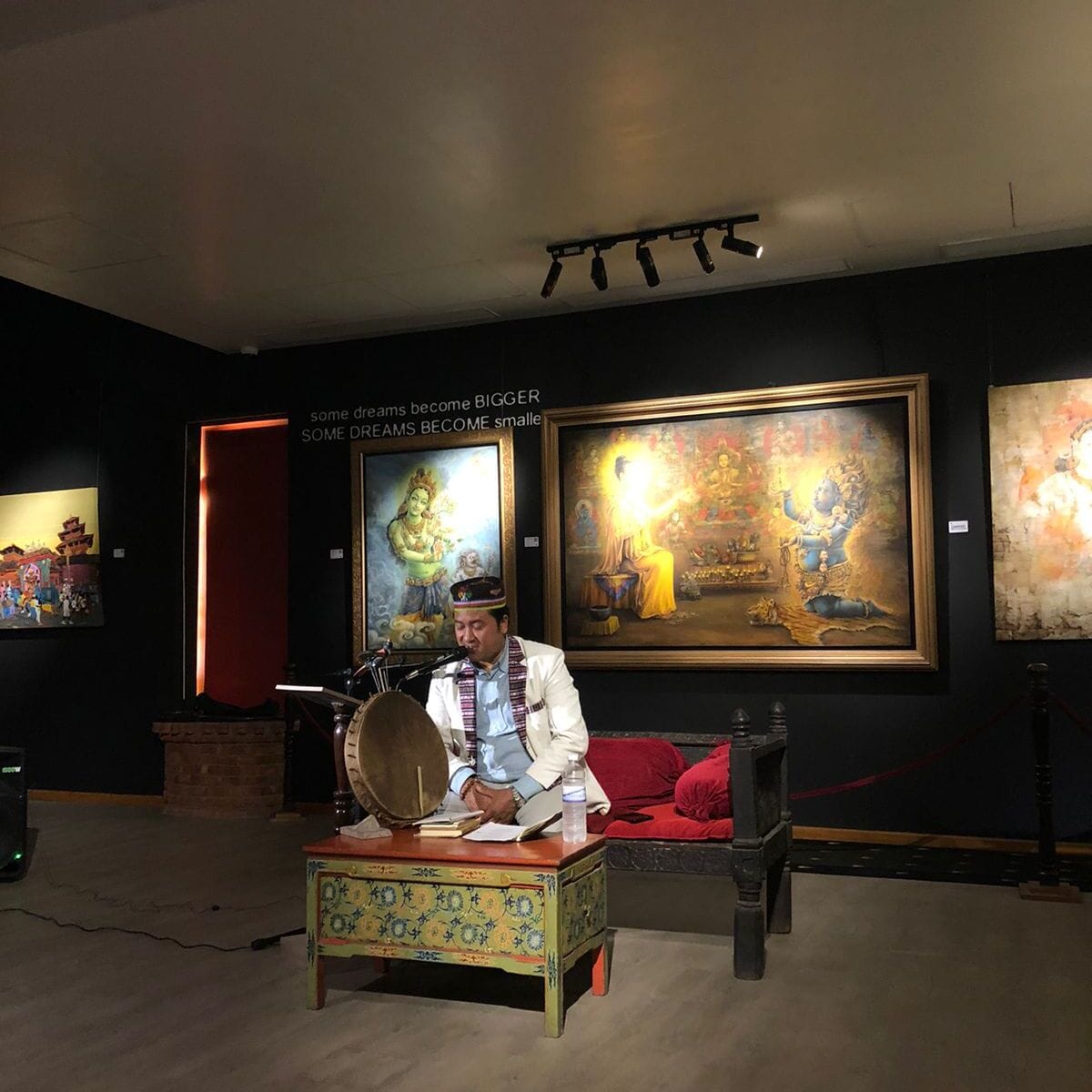
The story of “Peng Dorje” is a significant Tamang myth, believed to be linked to the earliest ancestor of the Tamang people. However, this ancestral figure might not have been an ordinary human like us but rather a more extraordinary being, as suggested by researchers and storytellers. According to oral tradition, it is said that Peng Dorje created the “Damphu” (a traditional Tamang drum) to please his wife.
One widely known narrative tells of how Peng Dorje crafted the damphu to cheer up his wife. He hunted a wild animal called “Ghoral,” and after skinning it, used the hide to construct the drum. He shaped the drum using a circular frame made of koirala wood from the hills, fastening it with 32 nails made of wood from the lowlands (madhesh). To enhance its sound, he added a bamboo stick on the underside, which produced a rhythmic “tyak tyak” sound when played. He topped the drum with the shape of a “Danfe” (a type of bird) and sang songs to delight his wife.
This oral tradition, passed down through generations, attributes the origin of the damphu to Peng Dorje’s ingenuity and love for his wife. As a mythical creator, Peng Dorje is believed to have played a central role in shaping Tamang culture. This ancient myth symbolizes the beginnings of the Tamang tradition and reflects the richness of their oral heritage, where the damphu became a key cultural artifact.
Fhul Kumar Bamjan
Greetings, everyone! Especially today, I’ve taken the initiative to share some thoughts by comparing my life and struggles with my country and surroundings.
Why? Because when a child born in a rural, remote area opens their eyes, they see who is in their family, what their village and community are like, what the environment for education is like, what the paths for struggling and walking are like, and how a child becomes a citizen of Nepal. After gaining citizenship, what does he do, how does he struggle, how does he fight, and whether he is able to stand firm on his ground? Such challenges constantly arise in life’s struggles. Especially in matters of education, certain topics are connected, but the practical challenges are often ignored. A person studies one way and navigates life from a different path. In Nepal, people often get caught between these two streams.
When the struggles of village, farmer life, a childhood tied to the soil and production, transitions to city life. Once a rural farmer becomes a city dweller, they face numerous challenges. Coming to Kathmandu, a place with polluted air and the need to buy everything, depletes the little pocket money they bring. They don’t have many acquaintances or connections in the city. Although there might have been a few, there were no means to reach out to them. We, a group of 8-10 friends from the village, came to Kathmandu with money earned from selling medicinal herbs and a few sacks of rice. After exploring Kathmandu for a few days, we ran out of money. We had heard that there were plenty of jobs in Kathmandu, so we went to Banepa. For 1 week, we struggled to find work. Initially, wearing neat clothes didn’t get us jobs. On the advice of friends, we switched to wearing worn-out clothes, and from that day, we started getting work. For 26 days, we labored, working on potato farms and construction sites, and eventually returned to the village.
After spending some time in the village, I returned to Kathmandu a few years later. While, in the village, Marxism education was being provided and its training was increasing, the ideas of revolution and societal change were spreading. I wanted to save myself from it, that’s why I came to Kathmandu. In Kathmandu, the challenges of earning a living and surviving were significant. Amid those challenges, I had to explore and adjust to many different places.
The legacy of Damphu
The story of “Peng Dorje” is a significant Tamang myth, believed to be linked to the earliest ancestor of the Tamang people. However, this ancestral figure might not have been an ordinary human like us but rather a more extraordinary being, as suggested by researchers and storytellers. According to oral tradition, it is said that Peng Dorje created the “Damphu” (a traditional Tamang drum) to please his wife.
One widely known narrative tells of how Peng Dorje crafted the damphu to cheer up his wife. He hunted a wild animal called “Ghoral,” and after skinning it, used the hide to construct the drum. He shaped the drum using a circular frame made of koirala wood from the hills, fastening it with 32 nails made of wood from the lowlands (madhesh). To enhance its sound, he added a bamboo stick on the underside, which produced a rhythmic “tyak tyak” sound when played. He topped the drum with the shape of a “Danfe” (a type of bird) and sang songs to delight his wife.
This oral tradition, passed down through generations, attributes the origin of the damphu to Peng Dorje’s ingenuity and love for his wife. As a mythical creator, Peng Dorje is believed to have played a central role in shaping Tamang culture. This ancient myth symbolizes the beginnings of the Tamang tradition and reflects the richness of their oral heritage, where the damphu became a key cultural artifact.
The village in Tamang community
If we look back at history in this modern era, it leads us to the ancient stories of the Tamang people, where the wisdom of our ancestors, the “tamba,” unfolds through their songs and narratives. It tells us about an open world that existed before humanity walked this earth—a world filled with air, water, and the earth. After the earth formed, the tales of how humans came to be are found in the songs and stories of our ancestors, the “bombo.” These songs guide us back to an era where the earth was created, and the Tamang people began building their own language, culture, and civilization.
These stories also tell of how our ancestors survived using the bounty of the land—consuming wild edibles like tarul (yam), sisnu (nettle), gittha, ainselu (wild raspberry), kafal (bayberry), and various fruits, herbs, and roots like amala, bhalaayo, and bamboo shoots. They lived on foraged and cultivated foods and developed knowledge of medicinal plants, becoming pioneers in the use of natural remedies.
In the past, when there were no roads or hospitals, survival was challenging. For instance, in Sindhuli, there were no hospitals during our grandparents’ time. They relied on natural remedies and long journeys to obtain essential goods like salt. The story of carrying salt from Tibet (China) to Nepal is etched into our heritage. These treks were perilous, taking months to complete. Many young men lost their lives to wild animals, treacherous trails, or illness. Those who returned brought salt to sustain their families, while those who did not became stories for future generations, remembered with sadness and reverence.
These stories are not merely about survival but about resilience. Our ancestors lived without the comforts of modern homes, restaurants, or inns. They carried their belongings, cooked on stones, and slept under the open sky, braving the elements. Despite hardships, they built our civilization, creating tools, weaving fabric, and crafting a life with what little they had.
Today, as we stand in the 21st century, I feel immense respect for those ancient beings, who were not just survivors but creators, inventors, and protectors of our heritage. They taught us to live with nature, enduring hunger and hardship but preserving the beauty of this land. This love for our soil, our roots, and our heritage should not be lost, yet modern education and urbanization seem to have distanced the newer generations from it.
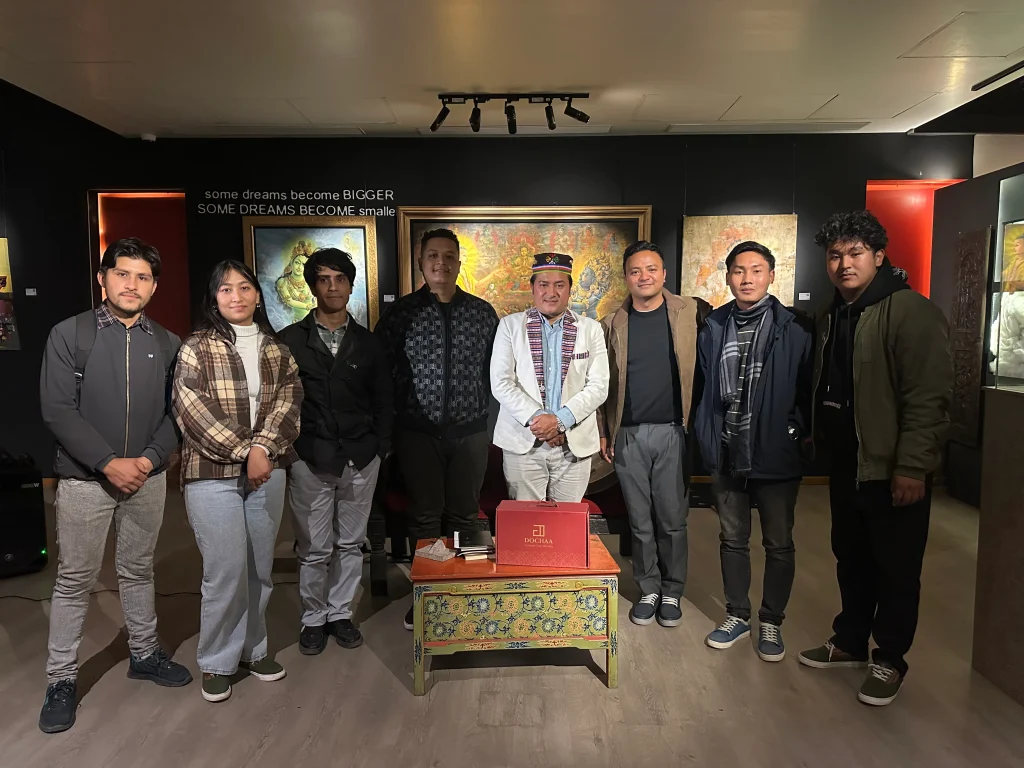
The stories of these early settlers, the salt carriers, the weavers, and the creators of life should be documented and studied. Their contributions, their tools, their struggles, and their way of life deserve to be honored. Today, as we carry forward this legacy, our connection to this land remains steadfast. Joining the Dochaa team is part of this journey of rediscovering our roots, celebrating our stories, and honoring the creators of our heritage.
The village in Tamang community
If we look back at history in this modern era, it leads us to the ancient stories of the Tamang people, where the wisdom of our ancestors, the “tamba,” unfolds through their songs and narratives. It tells us about an open world that existed before humanity walked this earth—a world filled with air, water, and the earth. After the earth formed, the tales of how humans came to be are found in the songs and stories of our ancestors, the “bombo.” These songs guide us back to an era where the earth was created, and the Tamang people began building their own language, culture, and civilization.
These stories also tell of how our ancestors survived using the bounty of the land—consuming wild edibles like tarul (yam), sisnu (nettle), gittha, ainselu (wild raspberry), kafal (bayberry), and various fruits, herbs, and roots like amala, bhalaayo, and bamboo shoots. They lived on foraged and cultivated foods and developed knowledge of medicinal plants, becoming pioneers in the use of natural remedies.
In the past, when there were no roads or hospitals, survival was challenging. For instance, in Sindhuli, there were no hospitals during our grandparents’ time. They relied on natural remedies and long journeys to obtain essential goods like salt. The story of carrying salt from Tibet (China) to Nepal is etched into our heritage. These treks were perilous, taking months to complete. Many young men lost their lives to wild animals, treacherous trails, or illness. Those who returned brought salt to sustain their families, while those who did not became stories for future generations, remembered with sadness and reverence.
These stories are not merely about survival but about resilience. Our ancestors lived without the comforts of modern homes, restaurants, or inns. They carried their belongings, cooked on stones, and slept under the open sky, braving the elements. Despite hardships, they built our civilization, creating tools, weaving fabric, and crafting a life with what little they had.
Today, as we stand in the 21st century, I feel immense respect for those ancient beings, who were not just survivors but creators, inventors, and protectors of our heritage. They taught us to live with nature, enduring hunger and hardship but preserving the beauty of this land. This love for our soil, our roots, and our heritage should not be lost, yet modern education and urbanization seem to have distanced the newer generations from it.
The stories of these early settlers, the salt carriers, the weavers, and the creators of life should be documented and studied. Their contributions, their tools, their struggles, and their way of life deserve to be honored. Today, as we carry forward this legacy, our connection to this land remains steadfast. Joining the Dochaa team is part of this journey of rediscovering our roots, celebrating our stories, and honoring the creators of our heritage.